MD & DO
Turn every lecture into the questions your exam will ask
Alma is an AI study platform for medical students. Upload a lecture or your own notes. You get board-style questions, flashcards on a spaced-repetition schedule and a mind map, all from the material you were actually taught.
- USMLE Step 1
- Step 2 CK
- COMLEX
- Shelf exams

Where to start
Your first week, if you're a medical student
Quizzes follow the style of USMLE Step 1, Step 2 CK, COMLEX or the NBME shelf exams, whichever is on your profile. Step 2 CK questions lean toward the next best step in management.
Upload this week's lecture
Put in the slides or PDF your block coordinator posted. Choose your exam on your profile first, and the questions will read like your exam.
Take a quiz and read the report
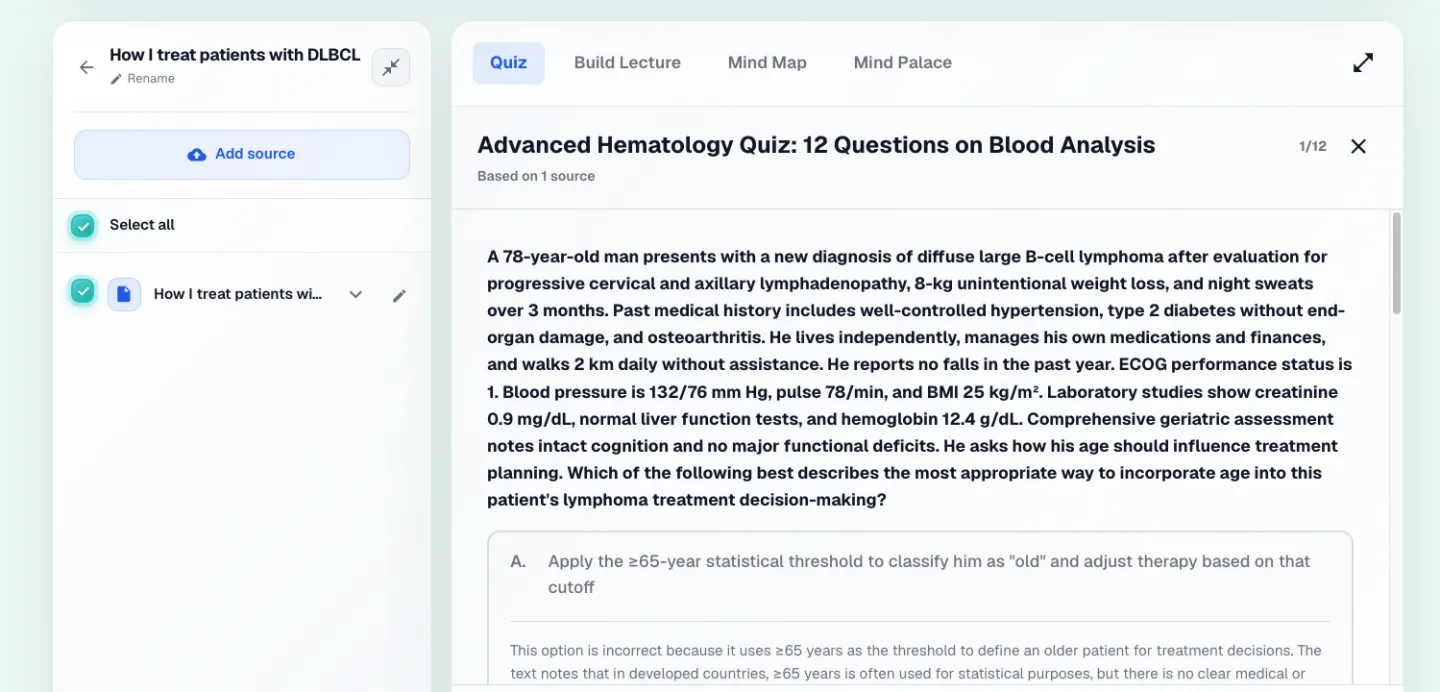
Twelve questions is the default. The report says what you got right, where you slipped, and why each wrong option was wrong.
Make cards and set the exam date
Import the notebook into a deck from the Flashcards page. Add your shelf or Step date in the Schedule, and the plan gives your weak topics more time.
Built for medical students
What each tool does for medical students
Every tool is the same for every audience. These are the examples written for yours.
Learning Hub
Upload what you were taught. Practise on it.
You get a pharmacology deck on Monday and a block exam on Friday. Upload the deck and take a 15-question quiz. The report shows which drug classes you keep mixing up. Step 1 and Step 2 CK have their own question styles, so the quiz reads like your exam.
Notebook
Notes you can write fast, and then actually use.
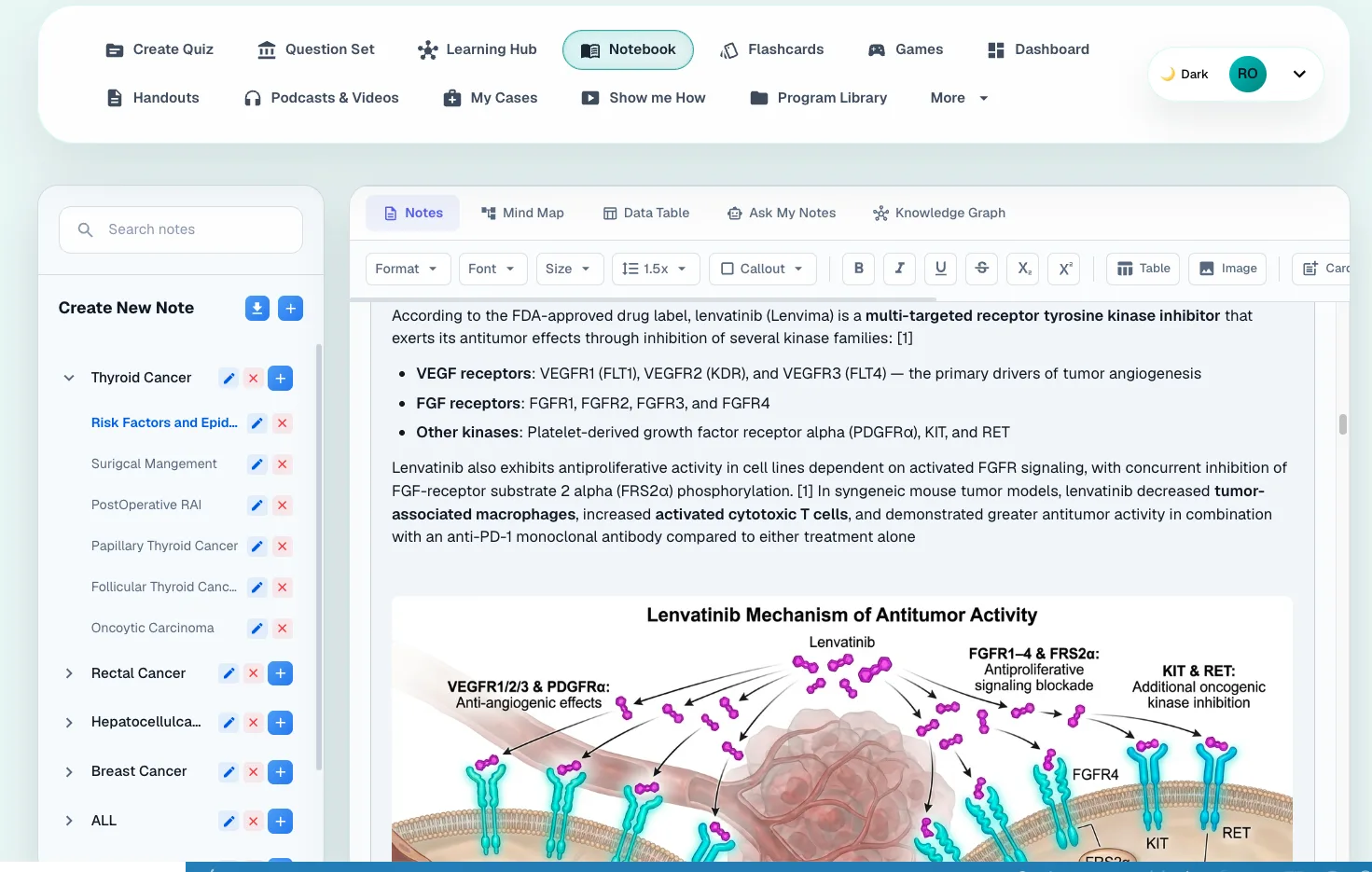
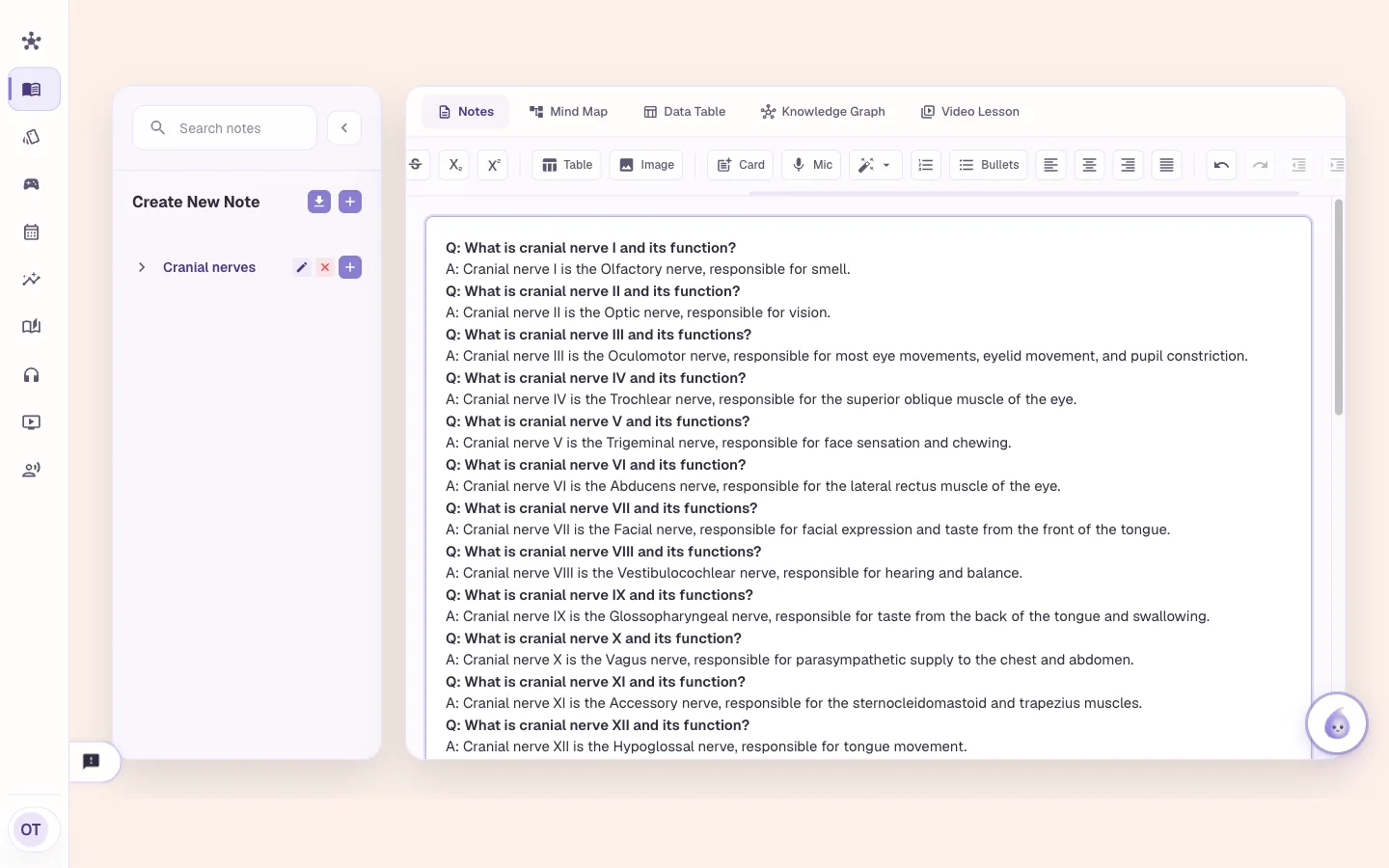
Lecture notes in the morning, notes from your review book in the afternoon, all in one notebook, organized by block. Select the paragraph on the brachial plexus and get a labeled diagram. Highlight the mnemonic you always forget and make it a card. For question practice, paste the same text into the Learning Hub as a source.
Flashcards
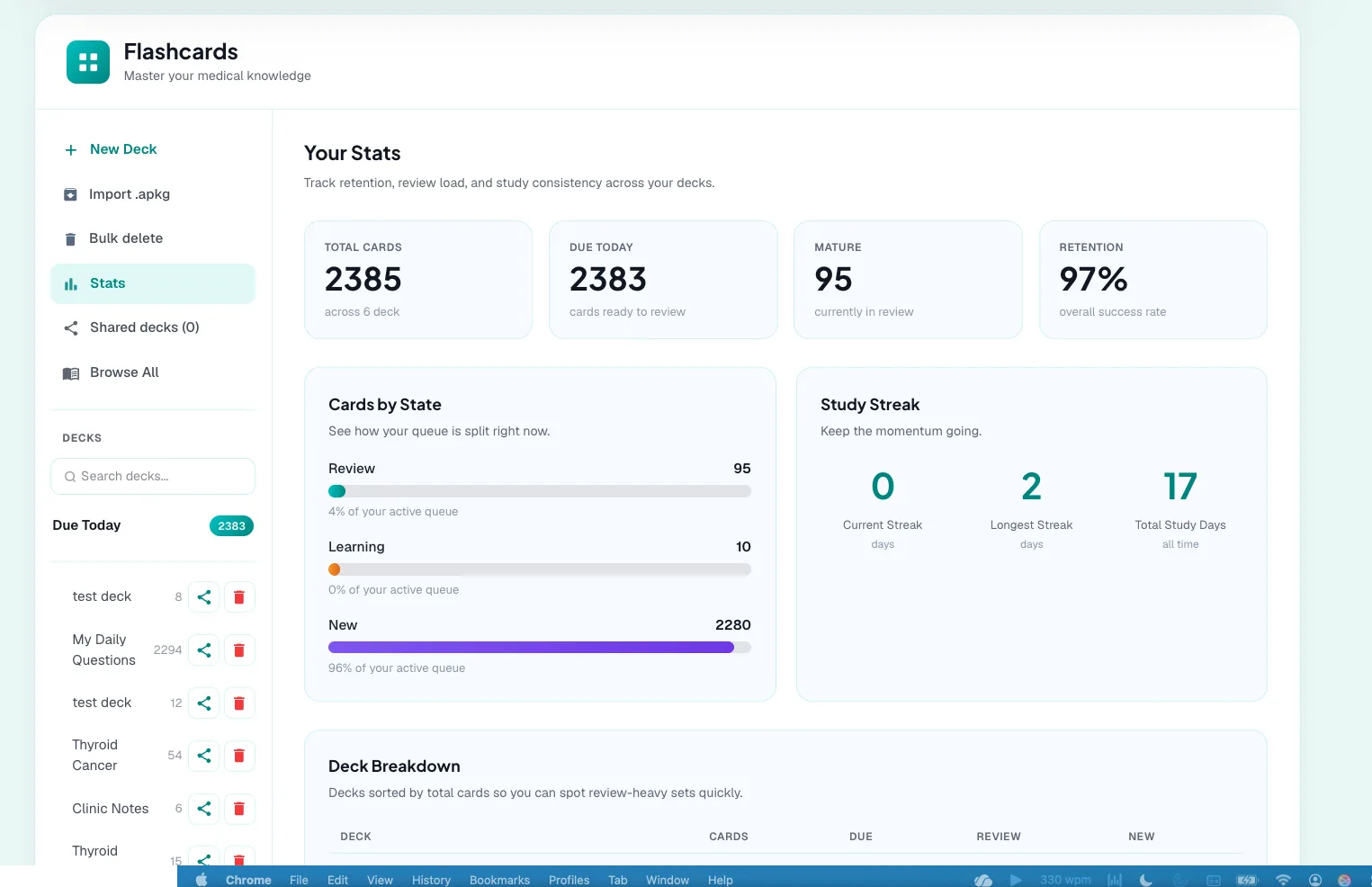
Flashcards that come back when you're about to forget them.
If you already use Anki, you don't have to give it up. Import your .apkg and the deck tree comes with it, along with your review history if you leave that option on. Scheduling doesn't start from zero. You can export a deck any time. Turn on Exam Mode before a shelf and cards come back sooner.

Practice Patients
Rehearse the encounter before it is graded.
Before a clinical skills exam or a clerkship oral, run the same presentation a few times. Taking the history, choosing what to examine and order, and committing to a diagnosis is the part you can't practise from a list of questions.
AI Assistant
Ask a question. Get an answer with its sources.
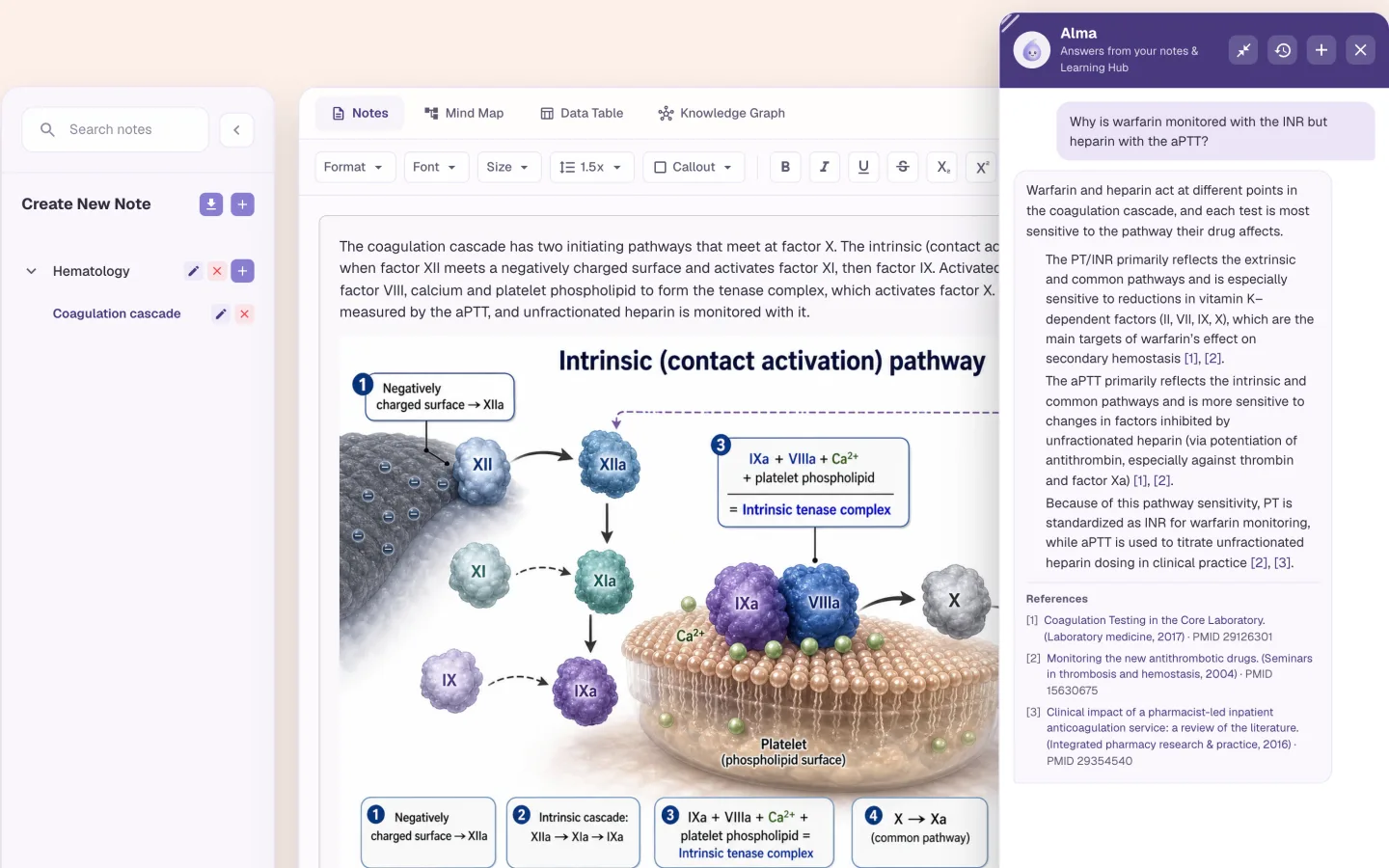
It's 6 a.m. on a clerkship and you've hit a drug interaction you've never heard of. Ask Alma. If you covered it, she answers from your notes. If you haven't, she answers from PubMed and lists the references. At night, Quiz me asks you questions out loud from your flashcards.
Podcasts
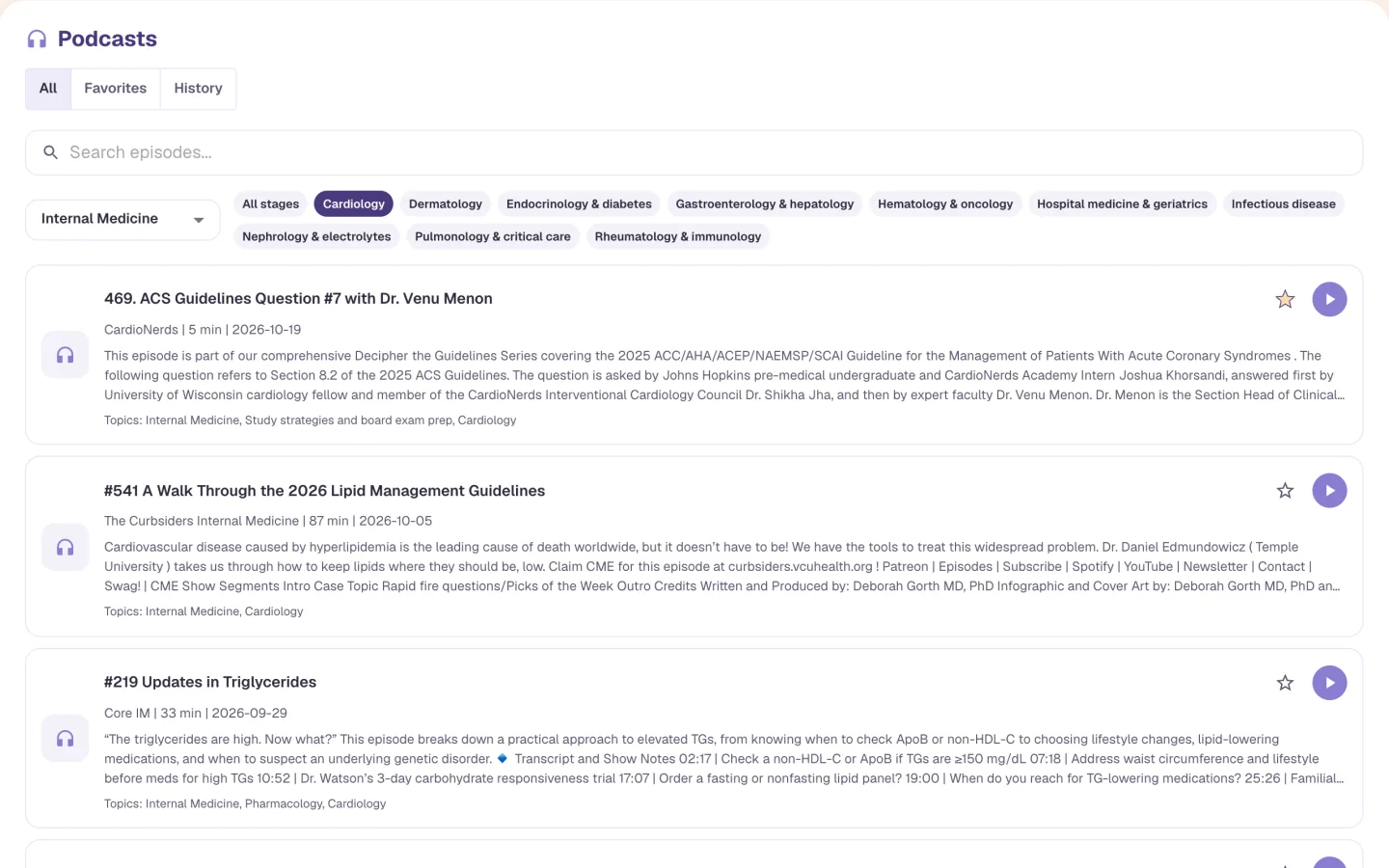
Medical podcasts you can find by topic.
The commute or the gym. Pick Internal Medicine, then Cardiology, and queue an episode on the guideline you're reading about this week. Jot a timestamped note without leaving the player. Or upload the lecture you're behind on and make a 10-minute episode of it to listen to.
Study Schedule
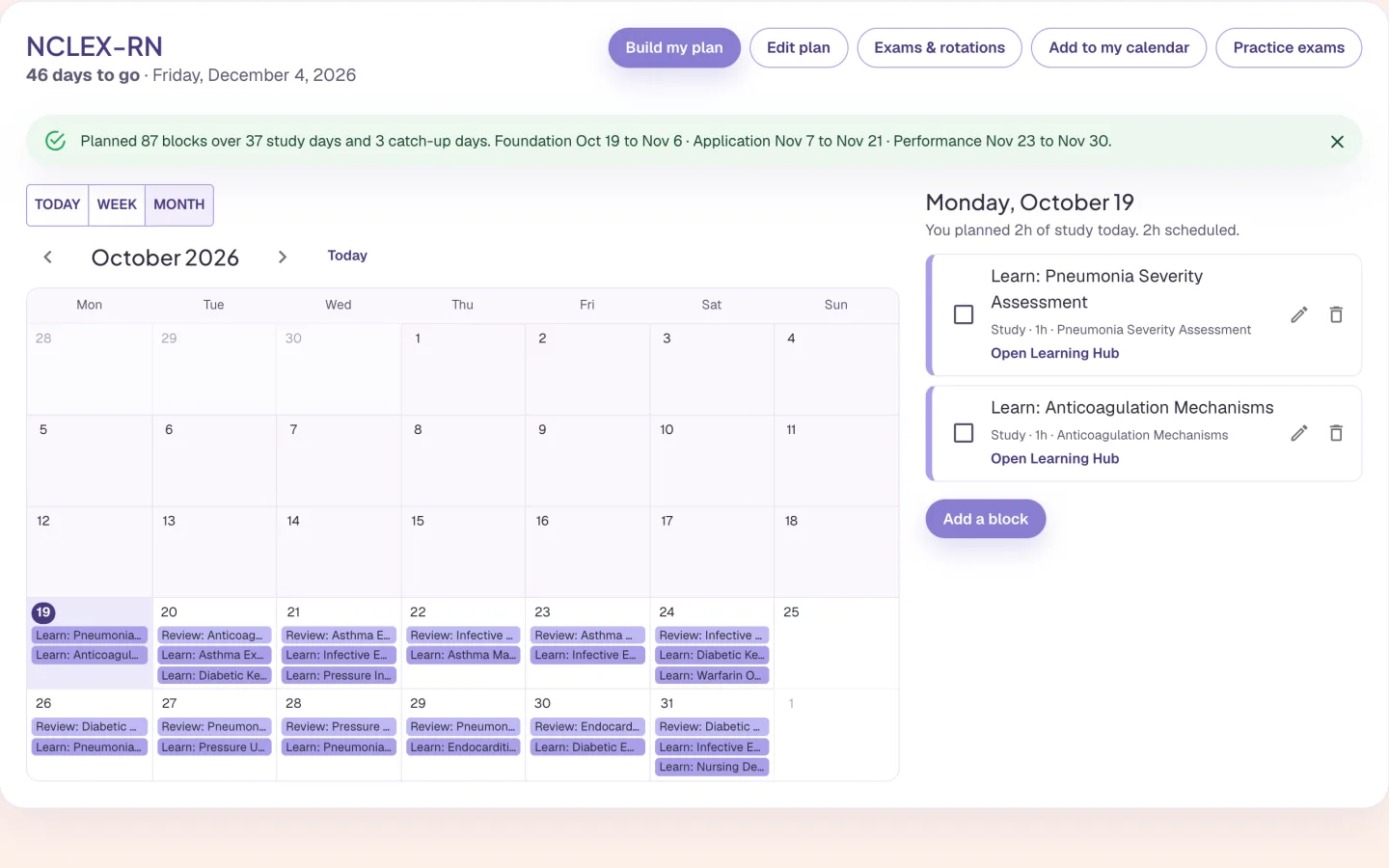
A study planner that builds your plan backwards from your exam date.
Add the shelf exam and USMLE as two exams, then your rotations, and mark each rotation as ending with its shelf. While the rotation runs, that shelf gets twice the share of the day, because you now have two or more exams. Log your NBME scores in Practice exams to see whether they're going up.
PDF to Flashcards
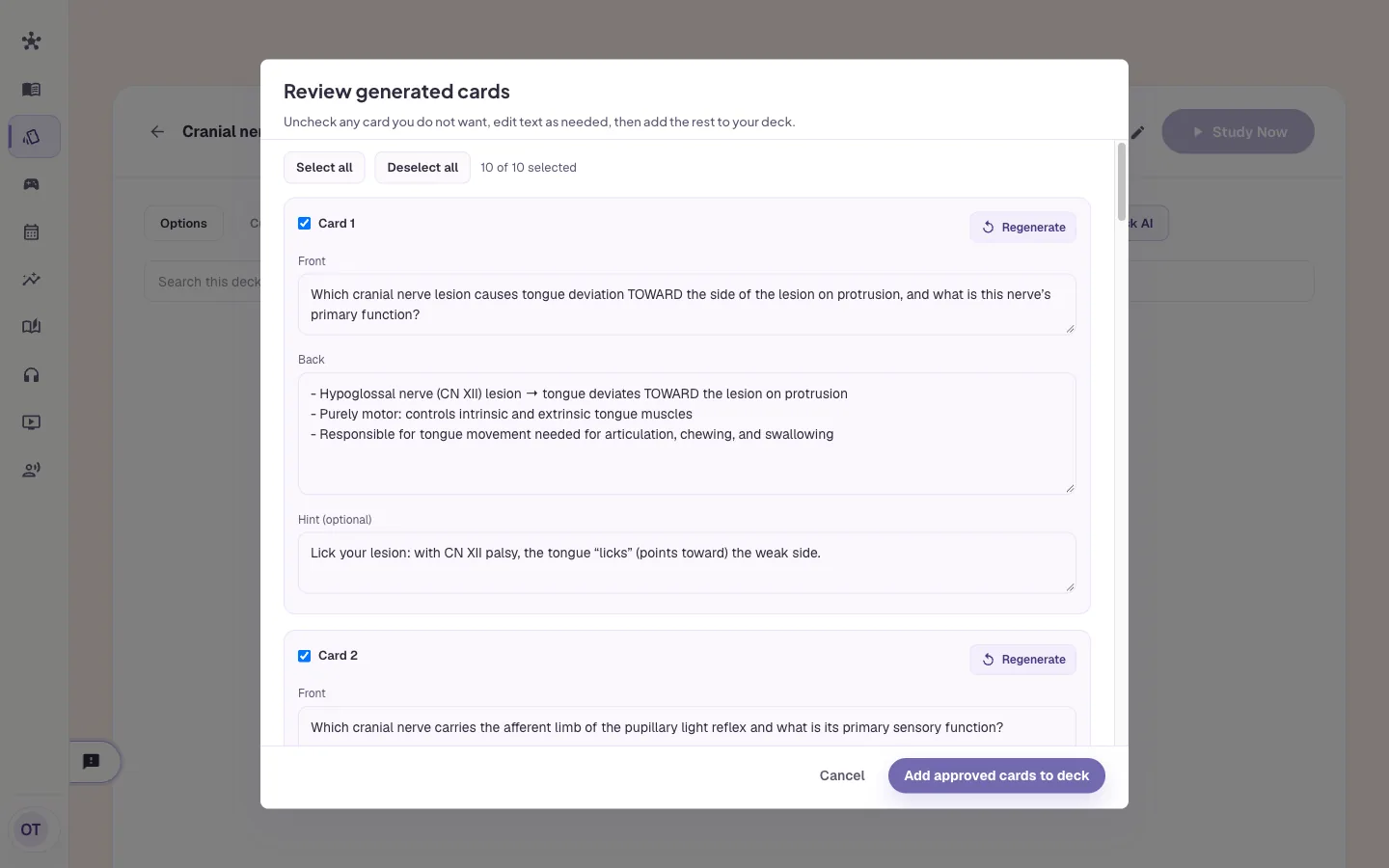
Turn a lecture PDF into flashcards you can check.
Upload this morning's lecture PDF and import 20 cards before dinner. Untick the ones that test trivia and keep the ones you would miss on a shelf. The deck is ready to study tonight.
Mnemonic Generator
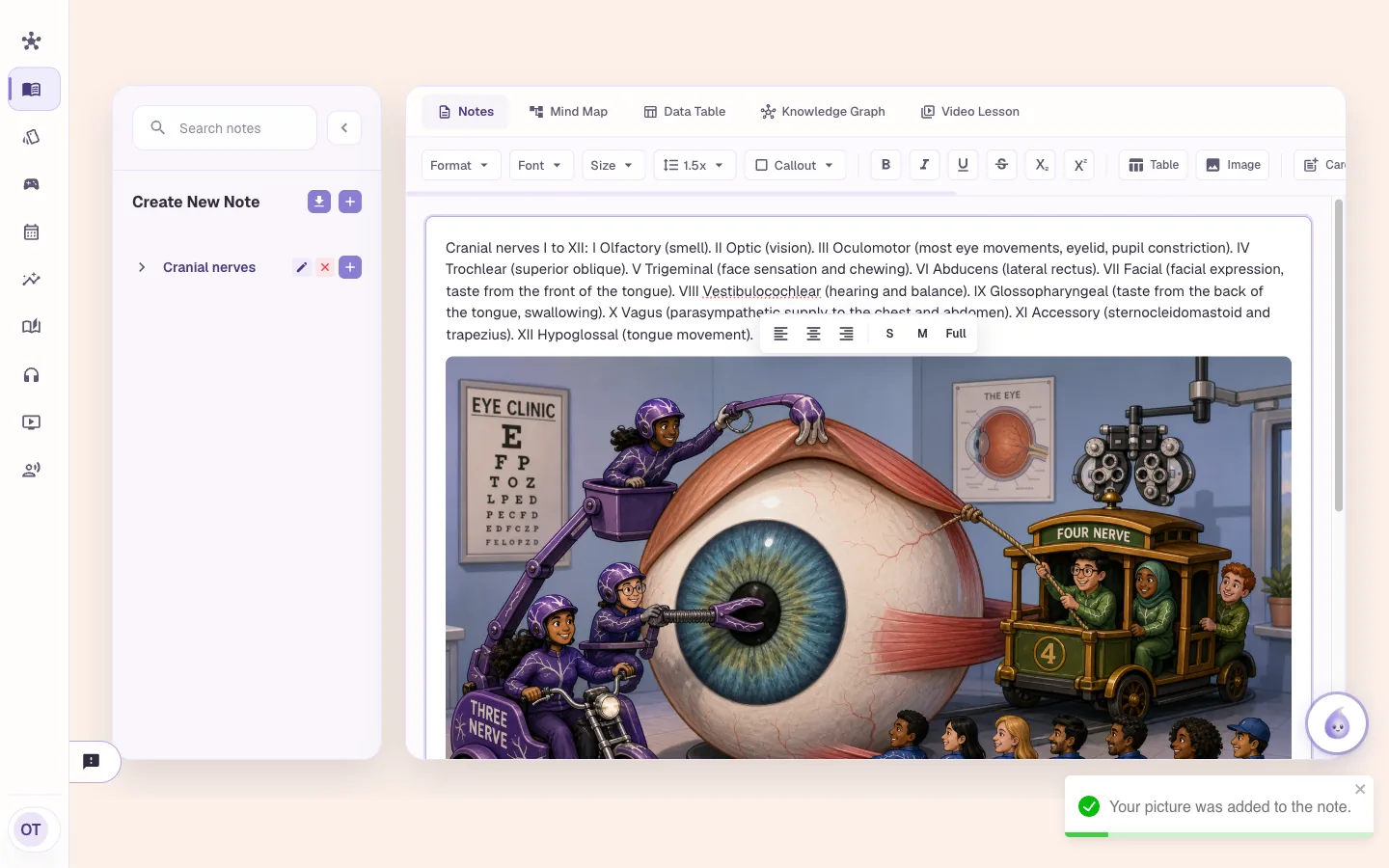
A mnemonic drawn from your own notes.
Cranial nerves, the brachial plexus, the steps of a cascade. Select the list from your notes and ask for a cartoon mnemonic. Read the key first, so you know which cue is which.
Study Guide Maker
Turn your notes into a study guide you can quiz yourself with.
Paste a lecture's notes, select the section on one organ system and rewrite it as a study guide. Cover the answers and quiz yourself before the lecture quiz.
Common questions
How does Alma work?
You bring the material your program actually assigned: lecture slides, course readings, your own notes. Alma turns it into practice questions, flashcards on a spaced-repetition schedule, mind maps, a knowledge graph and simulated patients. Every question comes from your own material.
Where do the questions come from?
From whatever you upload: a lecture PDF, a set of slides, a guideline or your own notes. The questions follow the style of the exam on your profile, and each one explains the correct option and every wrong one.
Which exams does Alma cover?
Exams covered for medical students: USMLE Step 1, Step 2 CK, COMLEX, Shelf exams. Every audience gets the same tools. The exam on your profile decides how the questions are written.
Is there a free trial?
Yes. Every individual plan starts with a one-week free trial. You are not charged if you cancel before it ends.
Is my material used to train AI models?
No. Your notes, uploads, questions and queries are not used to train, fine-tune or improve any AI model, ours or a third party's.
Start with one lecture
Upload something you are studying this week and see what comes back. No card required.
Start free
Last updated