For every profession
Everyone studies differently. Some people answer questions. Some need the topic drawn out before it sticks. Some listen on the way in. Some only really learn something once they have taught it. These are the tools for all of that — and they run on your own lectures, readings and notes, whether the exam at the end is Step 1, the NCLEX, the AANP or the PANCE.
Learning Tools
Making slides takes hours, and most of that is formatting, not teaching. Upload one PDF or several. You get a full deck back, with an image made for each slide from the content itself. Edit the text and the images here, then download a PowerPoint with the animations already in it.
Learning Tools
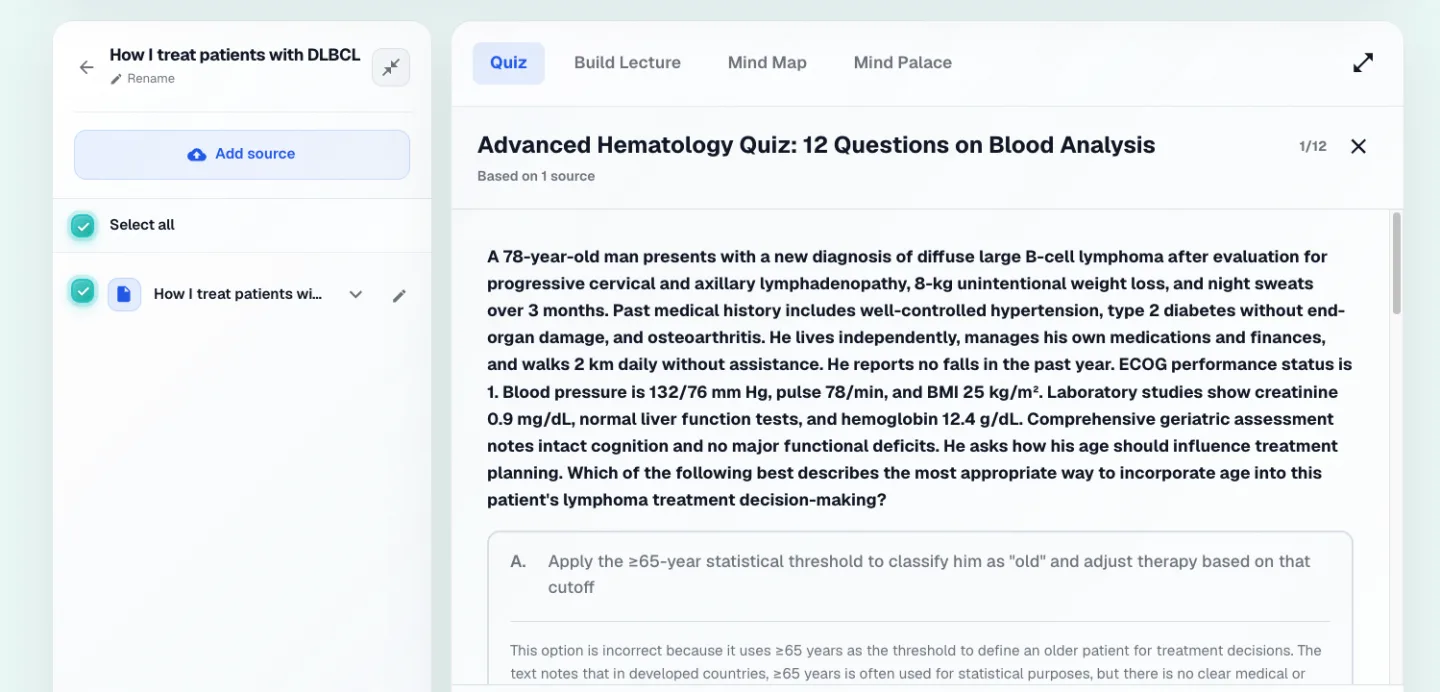
Your course coordinator posts a forty-page reading and says it is examinable. Upload it and get questions written from that document, in the style of your exam. Pick one section if that is the part you are worried about. At the end you get a report on what you missed.
Learning Tools
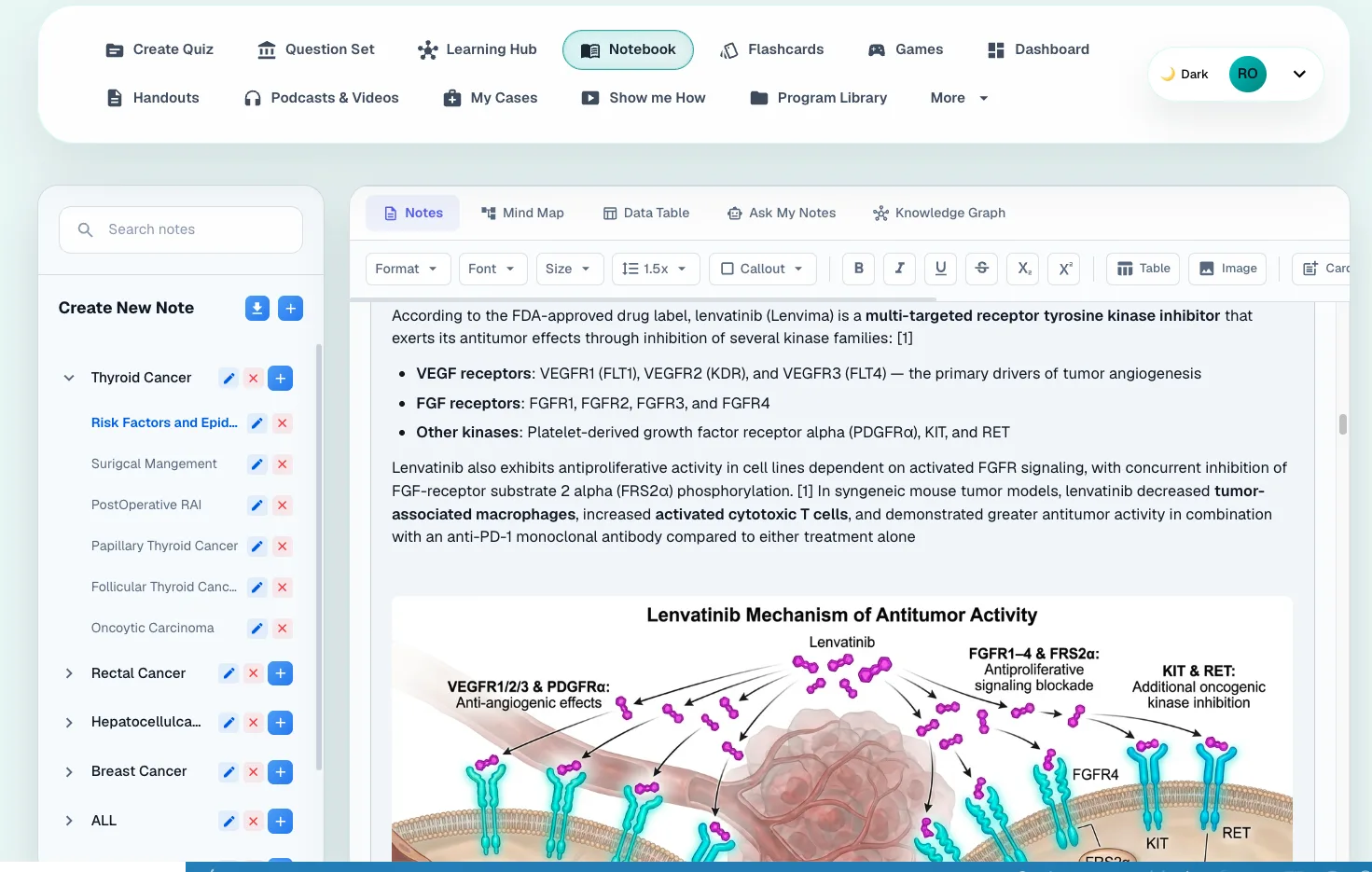
You understand why you got it wrong while the explanation is still in front of you. An hour later you do not. The Notebook opens next to the question so you can write it down right there. Your notes then turn into diagrams, algorithms, mind maps and flashcards on their own.
Learning Tools
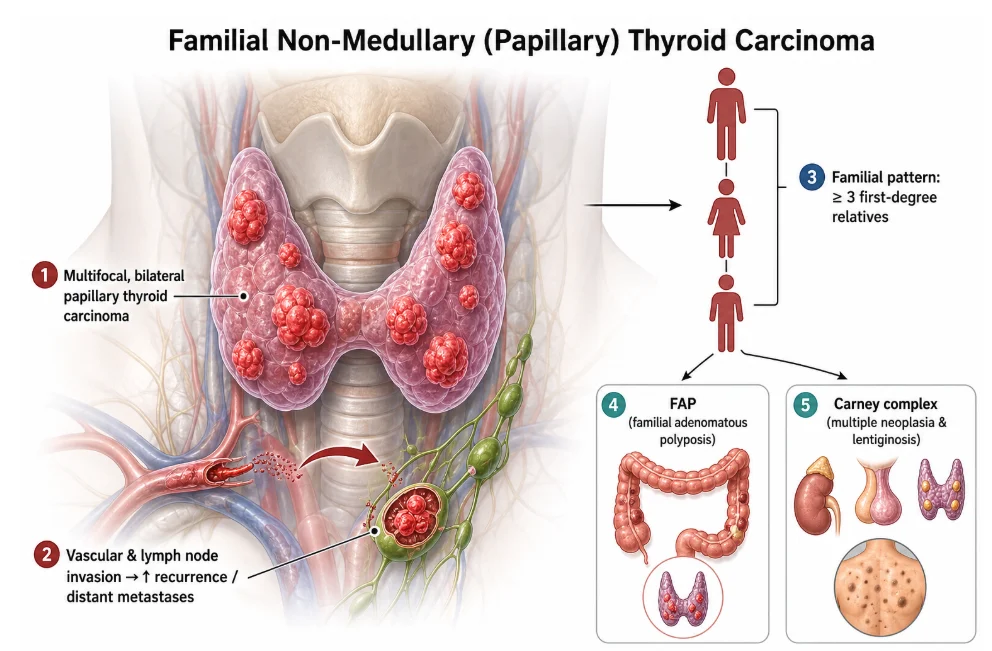
Some things are only hard because they are written down. Three paragraphs on the coagulation cascade — which factor activates which, where the two pathways meet, what each test measures — is a diagram someone wrote out as prose. Paste the text in and get the diagram back, labelled, so you can see the whole thing at once instead of holding it in your head.
Learning Tools
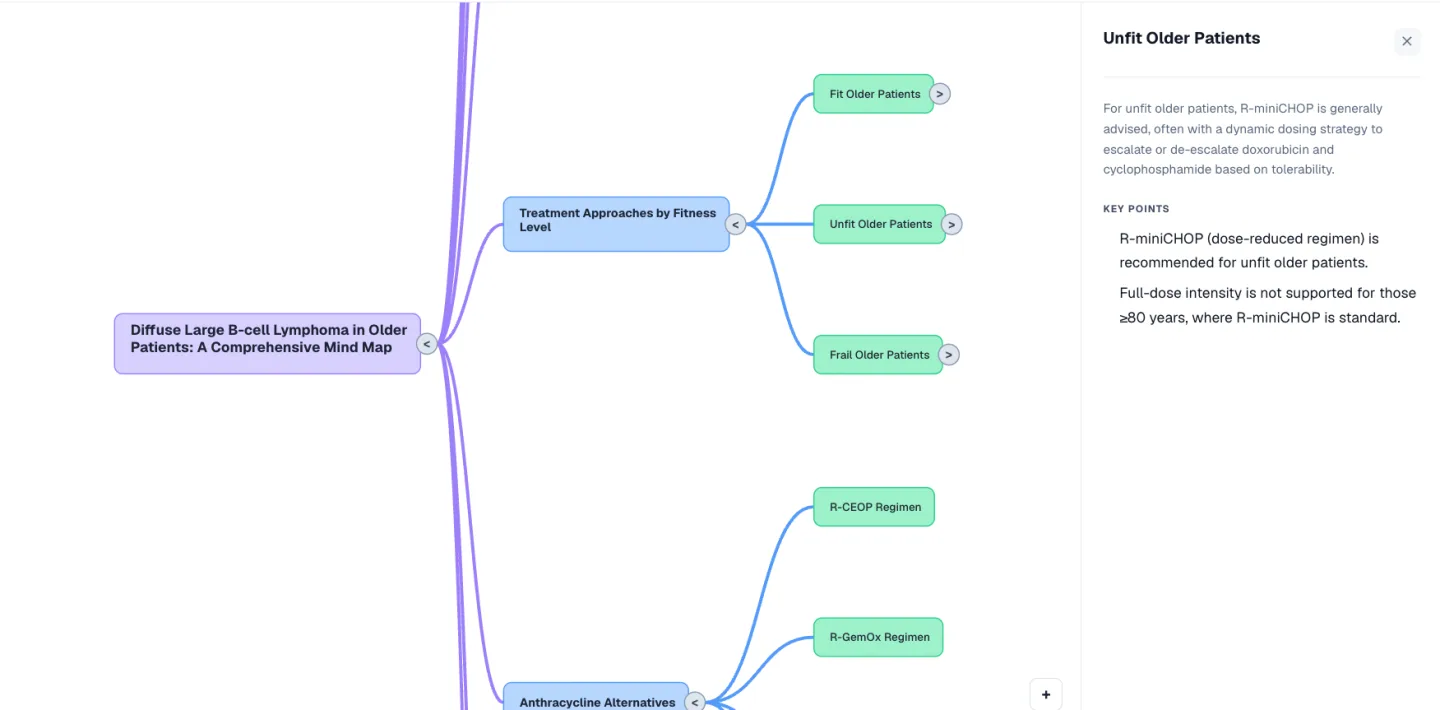
Some topics are too tangled for a list. Managing a patient in heart failure is a set of decisions that depend on each other. Your notes become a map you can open up, move around, and edit where you would have put it differently. Add more notes and it redraws itself.
Learning Tools
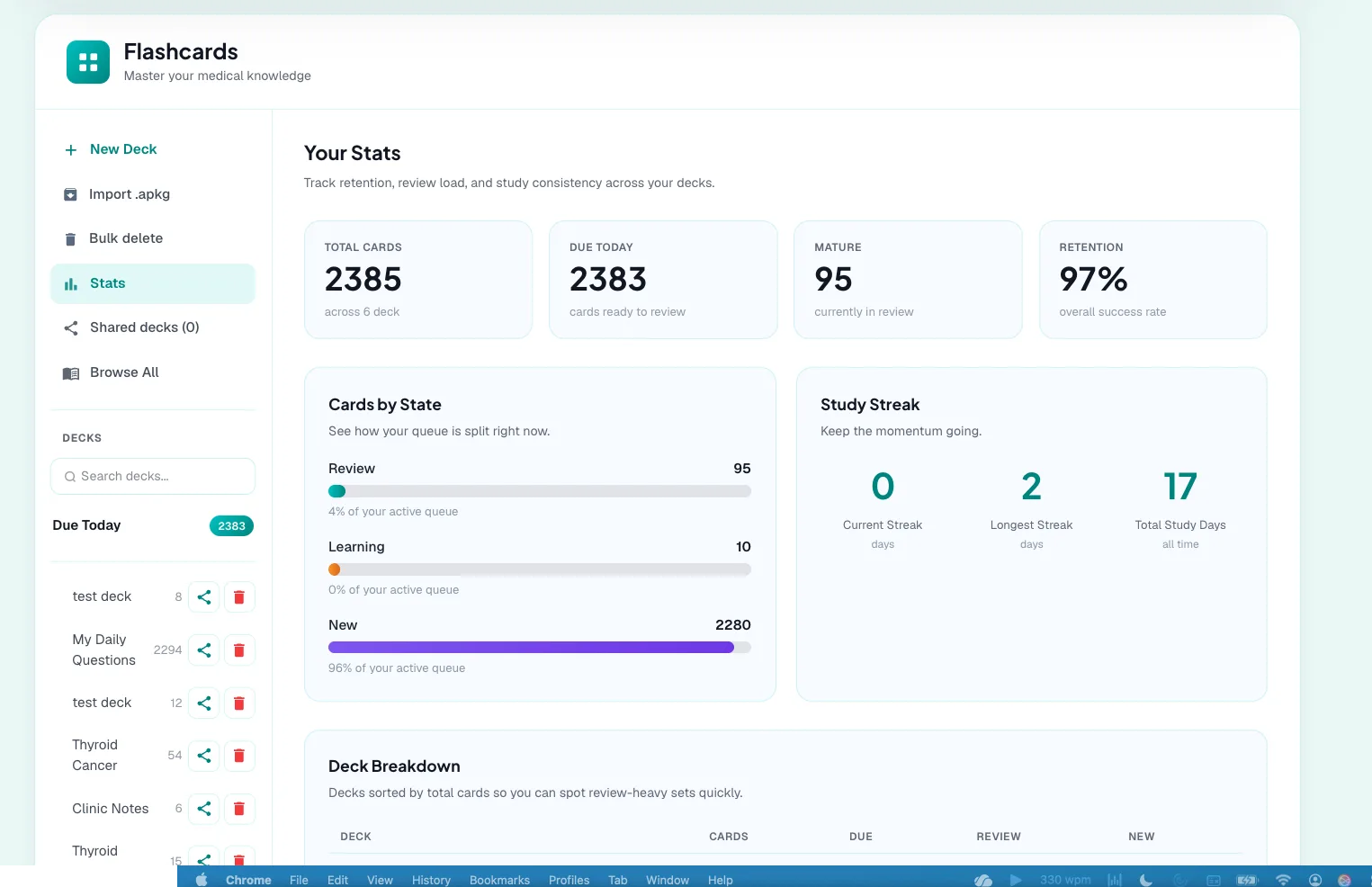
You look something up on placement, understand it, and it is gone by the weekend. Cards get made from your notes and uploads, then come back on an FSRS schedule, the same one Anki uses. Send a deck to your whole cohort or to one person by email. They can edit it, and their schedule runs separately from yours.
Learning Tools
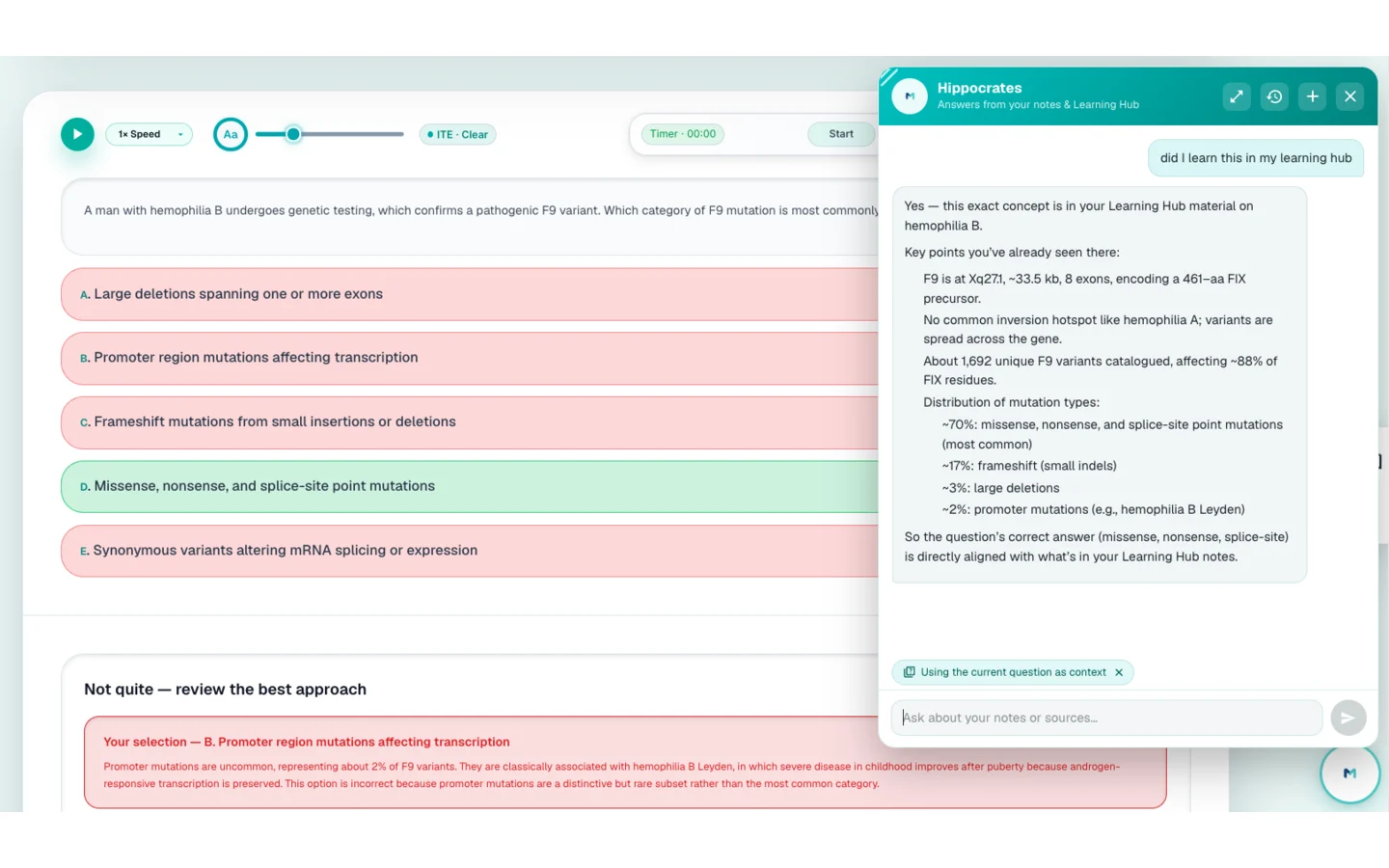
You know you read it somewhere. Maybe a paper you uploaded, maybe the explanation to a question you got wrong last month. Ask in plain words and get the answer back out of your own material, instead of scrolling through three documents hoping to spot it.
All of it in one place
Upload once, and every one of these works from the same material.
Podcast Radio Station
Real, human-hosted shows, picked and sorted by topic, so you are not searching the internet for something worth listening to. Take notes while it plays and they go into your Notebook.
Mind Palace
Turns your own lecture into a narrated video. Three styles to pick from, and you can point it at one section instead of the whole deck.
Knowledge Graph
Links the conditions, drugs and mechanisms across everything you have written down, so something you learned in pharmacology shows up again when it comes round on a clinical rotation.
Games
Quiz-show recall built from your own material. For the evenings when you cannot face another question block but do not want to do nothing.
Handouts
Printable summaries from whatever you uploaded. For placement, for a study group, or for the night before.
Medical image generation
Ask for the figure you wish the textbook had included. Useful when a mechanism is easier to look at than to read.